
Move: The Performance Power of Everyday Movement
For most of us there are more things to do than hours in the day. What could you do to get more done and perform at your best?
Delegate tasks? Streamline workflows? Create standard operating procedures for repetitive tasks or templates for emails you send all the time.
Yes, yes, yes, and of course, yes!
But what if there is a tool that doesn’t require a whole new system or advance planning. What if it is totally accessible at any time for you and it can sharpen your focus, sustain your energy, and boost your resilience like nothing else?
The surprising key to productivity is movement.
This is not exercise, it’s the simple act of your body doing what you already do every day to keep you functioning in daily life.
Unlike delegating tasks or streamlining workflows, movement doesn’t change any external factors. It changes your physiology. It changes you, giving your brain and body the boost they need to stay focused and productive, no matter what is on your task list.
March’s Wholebeing@Work theme is MOVE.
All month long, we are exploring the performance power of everyday movement, exploring ways to maximize the functional movement you are already doing, and actively seeking new opportunities to move during the workday. Bringing awareness and intentionality to the ways you move each day can transform your monotonous daily routine into a wholebeing exercise. One that increases your energy rather than depletes, builds up your resilience, elevates your mood, and ultimately keeps you going, motivated, and engaged throughout your day.
Organizations have made strides, upgrading chairs, standing desks, and encouraging walking meetings, but many workdays still include long stretches of stillness. Work culture has not fully embraced a deeper truth: how we move during the day directly influences how well we think, focus, and ultimately perform.
Mental Clarity and Focus
When you sit still for long periods, your brain slows down just like your body. Even brief periods of movement can improve blood flow, increase oxygen delivery to the brain, and enhance neural activity, all of which support attention, decision-making, and problem-solving.
In other words, moving during your workday doesn’t just help your body. It helps your brain work smarter.
Research supports this. A study published in Frontiers in Psychology found that short bouts of moderate activity, even just a few minutes of walking or stretching, can significantly improve executive function and focus. Another study in the Journal of Occupational and Environmental Medicine found that employees who incorporated brief movement breaks reported higher alertness and reduced mental fatigue than those who remained sedentary.
For practical application, small adjustments can make a big difference. Stand up to answer a phone call, take a quick walk between meetings, or do a few stretches at your desk. Even a 2–3 minute “movement micro-break” every hour can help reset attention and prevent the mental slump that often hits in the afternoon.
By intentionally incorporating movement into the workday, you are giving your brain the physiological boost it needs to maintain clarity and focus, and creating the conditions for better performance without adding extra hours to your day.
Energy and Resilience
Short periods of movement can also have a surprisingly big impact on energy levels. Sitting for long stretches not only tires your muscles but also slows circulation, which leaves you feeling drained and unmotivated. Intentional movement throughout the day helps counteract these effects.
Movement also plays a key role in resilience. When we move, our nervous system shifts into a more balanced state, helping reduce stress and improve emotional regulation. In fact, research shows that physical activity can lower cortisol levels, enhance mood, and support a sense of control during high-pressure situations. In the workplace, this means employees are better able to navigate challenges, recover from setbacks, and sustain performance over the long day or week.
Practical ways to harness this energy include short walks during breaks, standing meetings, gentle stretches at your desk, or even playful exercises like the “Have a Ball” activity used in our Wholebeing@Work Live Workshop, Master Your Day With Movement: Boost Focus + Productivity Through Motion. The goal is simple: integrate movement into your day in ways that feel natural and achievable. Over time, these small moments add up, creating sustained energy, improved focus, and greater resilience, which are benefits that go far beyond the few minutes “lost” to moving.
Improved Productivity
Taking short, intentional movement breaks during the workday can directly improve productivity. Employees who move regularly return to their tasks with sharper focus, quicker problem-solving, and more creativity. Research shows that brief physical activity can enhance memory, increase cognitive flexibility, and reduce mistakes on complex tasks. These small moments of movement help teams work smarter without adding extra hours.
For example, a study in Occupational Health Science found that employees who included movement breaks throughout the day completed tasks more efficiently and reported higher job satisfaction. Even micro-movements, such as standing while reviewing documents or walking while taking phone calls, contribute to these gains.
Practical ways to integrate movement into the workday include:
- Taking a 2–5 minute movement break each hour
- Holding walking or standing meetings
- Doing stretches or desk-friendly exercises between tasks
- Using small props, like a ball or a water bottle, for quick movement exercises
When organizations make movement a regular part of the workday, they support employee health and boost performance. Small, consistent actions build focus, sustain energy, and strengthen resilience, ultimately allowing teams to achieve more without extending work hours.
Practical Ways to Move at Work
Here are simple ways employees and teams can add intentional movement throughout the day:
- Set a time to take micro-breaks every hour: It’s easy to lose track of how long you are sitting. Set reminder times to stand up, stretch, or walk for 2–5 minutes every hour to reset focus and energy.
- Walk or stand during meetings: Use walking or standing meetings when possible to keep blood flowing and minds engaged.
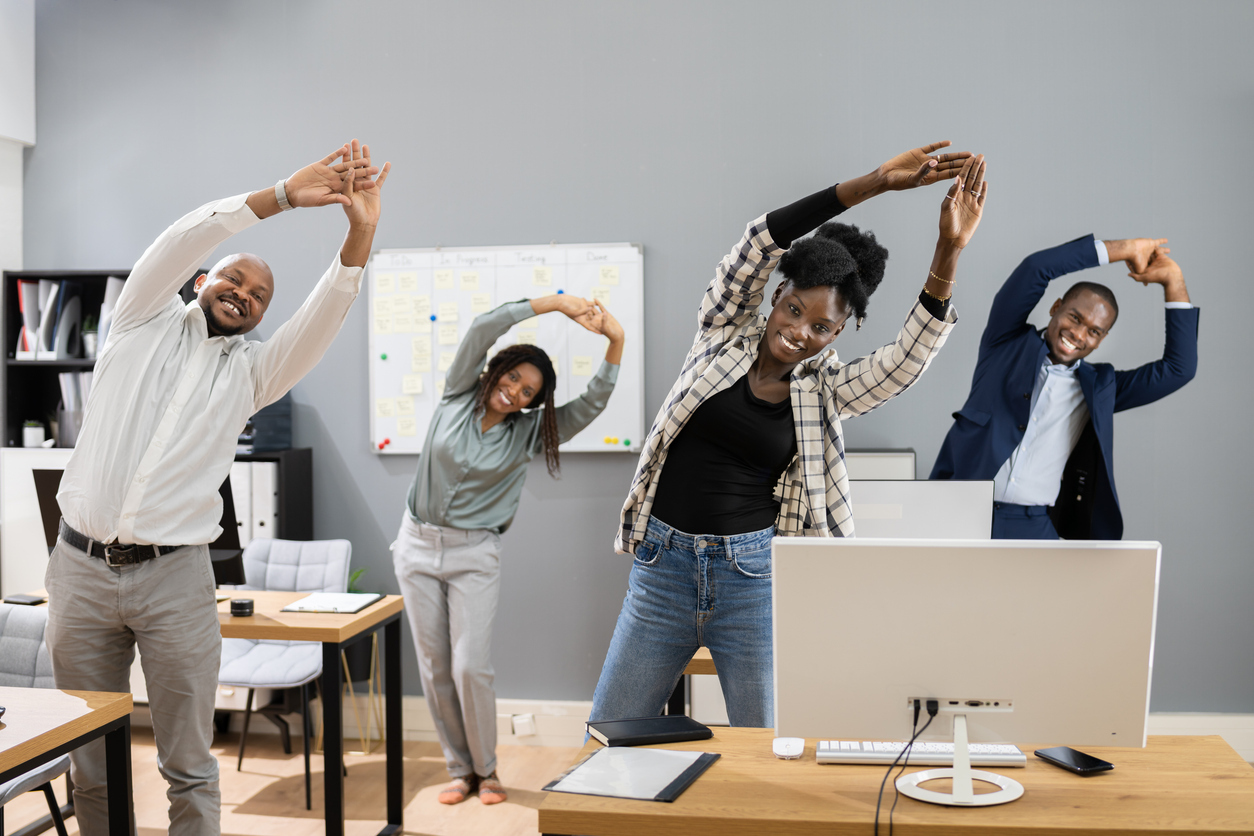
- Stretch at your desk: Shoulder rolls, neck stretches, and gentle twists can relieve tension and maintain mobility.
- Get creative with small props: Items like a ball, water bottle, or stapler can add variety to quick movement exercises.
- Incorporate movement into routine tasks: Stand while reviewing documents or walk while on phone calls.
- Encourage team movement: Invite colleagues to join a short walk or stretch break together for connection and accountability.
- Set consistent movement reminders: Use calendar alerts or phone notifications to create alerts after 30 minutes of sitting so you’ll naturally adopt consistent movement habits.
- Gamify it: Track steps, stretches, or micro-breaks and celebrate small wins to keep motivation high.
- Rotate tasks physically: Alternate between sitting, standing, or walking while completing different parts of your workday.
- Make it enjoyable: Pair movement with music, podcasts, or mini team challenges to make breaks something employees look forward to.
These actions are small, practical, and easy to implement. Over time, they accumulate into measurable benefits for focus, energy, resilience, and overall performance.
Movement is a simple, practical, and powerful tool for improving performance at work. By taking intentional breaks, standing, stretching, or walking, employees can sharpen focus, sustain energy, and build resilience. These small actions may seem minor, but over time they create a noticeable difference in productivity and well-being.
March’s Wholebeing@Work theme, MOVE, encourages teams to integrate everyday movement into the workday. By making movement a regular habit, organizations support both employee health and workplace performance. The result is a team that thinks more clearly, works more efficiently, and thrives in the face of daily challenges.
Leave a Comment